
Hear from Our Customers
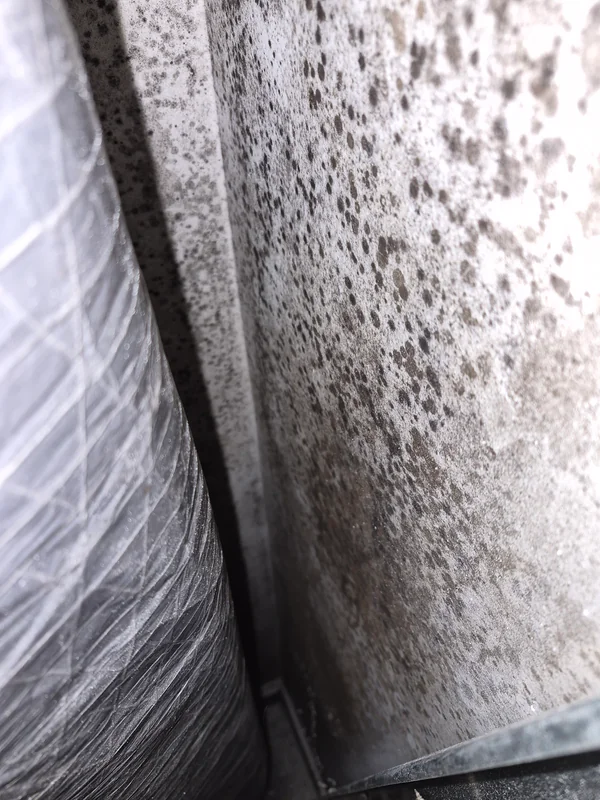
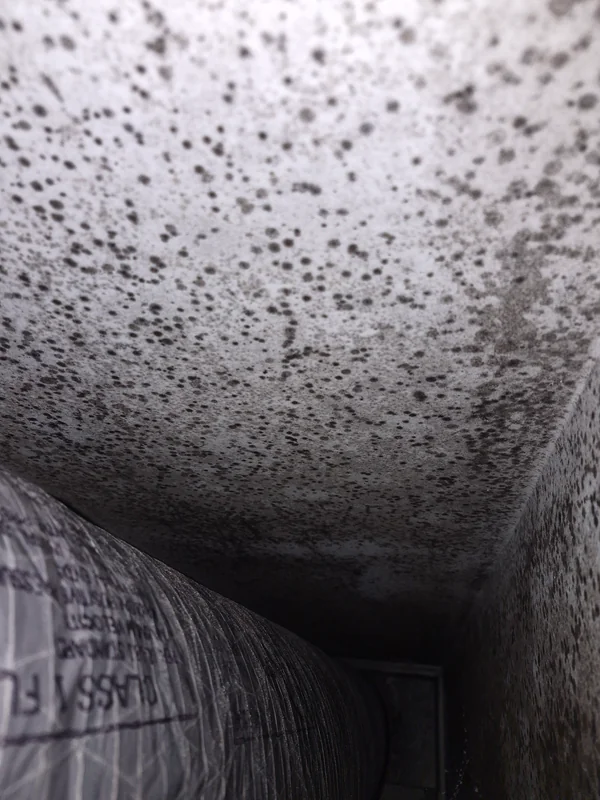
When your air ducts are contaminated whether it’s mold, years of accumulated debris, or both every time your system kicks on, it’s pushing that through every room in the house. You might notice a musty smell when the heat runs. You might notice your allergies getting worse in the winter when the windows are sealed. Or you might not notice anything at all, which is often the more concerning scenario in older homes.
For Margo Gardens homeowners specifically, the risk is compounded in ways that don’t apply to newer construction. These homes were built over 70 years ago, and the ductwork even if the furnace or AC unit has been replaced is frequently original. Aging sheet metal develops gaps and seam separations over decades. The Delaware River runs along the edge of Bristol Township, and that proximity creates ambient humidity levels that are measurably higher than inland communities. That combination old ductwork, high baseline humidity is exactly the environment where mold establishes itself inside a system you can’t see.
After a proper cleaning and inspection, the difference is straightforward: you know what was there, you have documentation that it’s been addressed, and your system is circulating air through clean ductwork instead of whatever has been accumulating since the Eisenhower administration. That’s not a small thing when you have kids in the house or someone with asthma sleeping down the hall.
We’re based in Bensalem directly adjacent to Bristol Township, about five to seven miles from Margo Gardens via Bath Road or US Route 13. This is the neighborhood we already work in, with the same postwar housing stock, the same aging ductwork, and the same Lower Bucks County humidity conditions that make HVAC mold a real and recurring issue here.
With over 15 years of certified mold remediation experience, our team brings something to duct cleaning that a general HVAC contractor simply doesn’t have: the training to identify, contain, and properly address mold inside a duct system without spreading spores through the rest of your home in the process. That distinction matters enormously in a 1951 brick ranch where the ductwork runs through walls and crawl spaces you can’t inspect yourself.
We already serve Levittown the community that shares your zip code, your building era, and your moisture challenges. We know what these homes look like from the inside, and we know what to look for.

It starts with a free inspection. Before any work is recommended or quoted, a certified inspector evaluates your system looking at the ductwork, the registers, the air handler, and any areas where moisture intrusion or mold growth is likely to have occurred. In a Margo Gardens home, that often means paying close attention to basement return air pathways, where ground moisture seeping into a 70-year-old foundation can feed mold directly into the HVAC system’s intake. You get a clear finding, not a sales pitch.
If cleaning is warranted, the process uses professional-grade equipment negative air pressure systems and HEPA vacuuming to physically remove debris and biological material from both supply and return ducts. This is not a one-duct-only job. Cleaning only supply ducts while leaving return ducts untouched is a documented industry shortcut that leaves the problem half-addressed. Every duct in the system gets attention.
After the cleaning is complete, we verify the results. That means testing to confirm the mold is actually gone not just assuming it is because the job is done. You get documentation of what was found and confirmation that it’s been resolved. Financing is available if needed, and we work directly with insurance companies when the contamination is part of a larger claim. The price you’re quoted before the job starts is the price you pay.
Ready to get started?
Air duct cleaning and air duct sanitizing are not the same service, and the difference matters when mold is involved. Cleaning removes the physical debris dust, dander, biological material from the interior of the ductwork. Sanitizing applies an antimicrobial treatment after the mechanical cleaning to address any remaining biological contamination on duct surfaces. When mold has been confirmed in a system, doing one without the other leaves the job incomplete. We address both as part of a thorough remediation process.
Dryer vent cleaning is also available, and in a neighborhood of 70-year-old brick ranches, it’s worth taking seriously. The NFPA reports over 15,000 dryer-related house fires annually, with failure to clean the vent being the leading cause. In older homes where the original dryer vent routing may be longer than current standards recommend or where the vent has never been professionally cleared that’s a real fire safety concern, not a maintenance preference.
For Margo Gardens and the surrounding Bristol Township area, we also handle indoor air quality testing and post-remediation inspection when mold has been found and treated elsewhere in the home. If you’ve had mold removed from a basement or crawl space and you’re wondering whether the ducts were affected, that’s exactly the question a free inspection is designed to answer. No Pennsylvania state license is required specifically for duct cleaning, but our certified mold remediation credentials go well beyond what the market requires.

The most common sign is a musty smell that appears specifically when your heating or cooling system turns on and disappears when it’s off. That pattern tells you the odor is coming from inside the duct system, not from another part of the house. Visible discoloration around registers or vents is another indicator, though by the time you can see it at the register, the contamination inside the duct is often more extensive than what’s visible.
In Margo Gardens specifically, the risk factors are layered. These are 1951-era homes with ductwork that has been cycling humid Lower Bucks County air for decades. The Delaware River proximity means ambient humidity here is higher than in drier inland communities, which creates condensation conditions on the interior surfaces of aging duct seams. If you’ve also had any basement moisture issues seepage, flooding, or even chronic dampness and your HVAC return air draws from that space, mold can migrate from the basement into the duct system without you ever seeing it directly. A free inspection is the only way to know for certain what’s in there.
The honest answer is that it depends on the situation. The EPA’s position is nuanced they don’t recommend routine duct cleaning as a blanket maintenance measure when there’s no specific problem present. But they do explicitly recommend cleaning when mold has been confirmed in the ductwork, when there’s evidence of pest or rodent infestation, or when significant debris is blocking airflow. Those aren’t edge cases they’re common findings in older homes.
For a home in Margo Gardens built in 1951, with original or partially original ductwork, the calculus is different than it would be for a ten-year-old house with sealed modern ductwork. Seventy years of humidity cycling, minor leaks, and accumulated biological material in a Lower Bucks County climate is a meaningful risk factor. If an inspection finds nothing concerning, you’ll know that too and that knowledge has value. If it finds something, you’ll be glad you looked before another heating season pushed contaminated air through every room in the house.
Air duct cleaning is the mechanical process using negative air pressure equipment and HEPA vacuuming to physically remove dust, debris, and biological material from the interior of your ductwork. It’s the foundational step. Air duct sanitizing is what comes after: applying an antimicrobial treatment to the cleaned duct surfaces to address any remaining biological contamination that the mechanical cleaning can’t fully eliminate on its own.
When mold is the issue which is frequently the case in older Bristol Township homes where moisture has had decades to work its way into duct seams doing the cleaning without the sanitizing step leaves biological residue on duct surfaces that can continue to off-gas or re-colonize. Think of it this way: cleaning removes what’s loose; sanitizing addresses what’s bonded to the surface. For a routine dust situation, cleaning alone may be sufficient. For a mold situation in a 70-year-old home near the Delaware River, both steps together are the complete answer.
A thorough professional air duct cleaning for a typical home takes between four and six hours. That’s the industry standard for a job done correctly covering both supply and return ducts, not just one or the other. If a company is quoting you a one-hour job, they are not cleaning your full system.
For a Margo Gardens brick ranch typically under 1,500 square feet with a compact layout the job is generally on the lower end of that range when there are no major complications. However, if the inspection reveals significant mold growth, extensive debris accumulation in aging ductwork, or areas that require containment before cleaning begins, the timeline can extend. Any reputable company will tell you upfront what they found during the inspection and how it affects the scope of the job before work begins. That’s exactly how we operate the inspection comes first, the scope is defined, and the price is quoted before anyone picks up a tool.
Yes, and this is one of the most important reasons to hire a mold specialist rather than a general HVAC technician for duct cleaning when mold is involved. When mold is disturbed inside a duct system through brushing, vacuuming, or even just running the system spores become airborne. Without proper containment protocols, those spores travel through the ductwork and deposit throughout every room the system serves. You can start with a mold problem in one section of ductwork and end up with spores distributed across the entire house.
A certified mold remediation specialist knows how to contain the work area, use negative air pressure to prevent spore migration, and verify through post-cleaning testing that the mold is actually gone rather than redistributed. That’s a fundamentally different process than what a standard HVAC duct cleaning technician is trained to do. In a Margo Gardens home where the ductwork runs through walls and crawl spaces that connect to every living area, getting this step right matters significantly.
For a home in Margo Gardens, yes this is one of the most useful things you can do before you’re fully settled. When you purchase a brick ranch in this neighborhood, you’re inheriting the HVAC history of everyone who lived there before you. In many cases, that’s 20, 30, or even 40 years of prior occupancy with ductwork that was never professionally cleaned. You have no way of knowing what’s accumulated in the system, and the previous owner almost certainly didn’t either.
The inspection is free, and it gives you a documented baseline what’s in the system, whether there’s any mold or significant contamination, and what (if anything) needs to be addressed. If the ducts are clean, you’ll have confirmation of that in writing. If they’re not, you’ll know before you’ve spent a winter running the heat through a contaminated system. For new buyers in a neighborhood of 70-year-old homes along Bath Road, that starting-point clarity is genuinely valuable and it’s a much easier conversation to have before you’ve moved all your furniture in.
Other Services we provide in Margo Gardens