
Hear from Our Customers
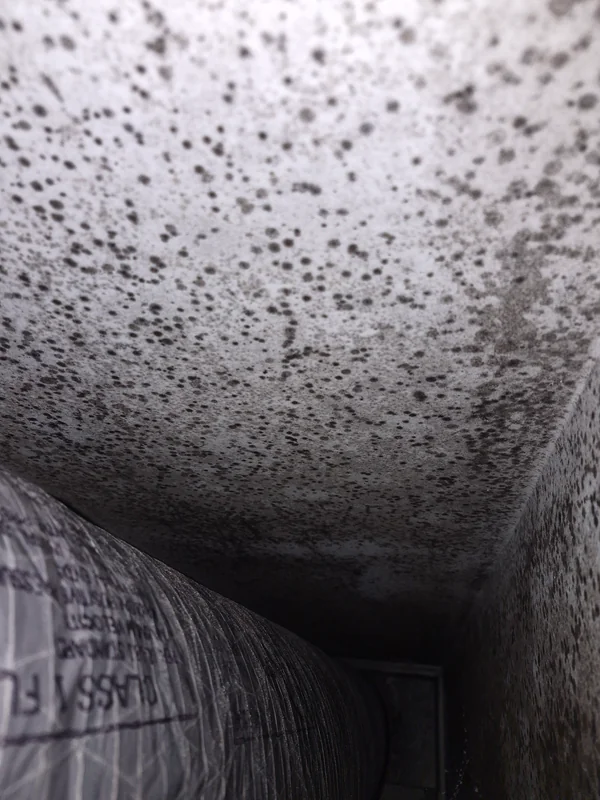
Most homeowners in Maple Beach and the surrounding area don’t think about their air ducts until they smell something when the heat kicks on in October. That smell musty, stale, slightly off is often the first sign that moisture has made its way into the ductwork and something biological is growing inside.
In a community like Maple Beach, where the Delaware River has flooded surrounding neighborhoods repeatedly and where the water table sits close to the surface, that’s not a hypothetical. It happens here regularly. When your HVAC system is running mold spores through every room every time it cycles, a new filter isn’t going to fix it.
What you need is someone who can actually assess what’s in there, contain it properly, remove it without spreading it further, and verify that it’s gone afterward. That’s the difference between a duct cleaner and a certified mold remediation specialist and it’s a meaningful difference when your home has spent decades absorbing riverfront moisture.
For the aging mid-century homes throughout Bristol Township the Levittown-era cape cods and split-levels that make up the bulk of the housing stock here ductwork that’s never been professionally cleaned isn’t unusual. It’s the norm. Getting a real answer about what’s in your system, from someone with the credentials to back it up, is the first step toward actually breathing easier.
We’re based in Bensalem which puts us right next door to Maple Beach and Bristol Township, a short drive via US Route 13 or I-95. This isn’t a national franchise routing calls through a 1-800 number. We’re a locally owned, owner-operated business that has been working in Bucks County’s Delaware River corridor long enough to understand what the humidity, the flooding history, and the aging housing stock actually do to a home’s HVAC system.
With over 15 years of experience and certified mold inspectors on every job, we bring a level of expertise that a general HVAC contractor simply doesn’t have. We use lab testing to identify what’s actually present, not just what’s visible. After the work is done, we test again to confirm the problem is resolved not just cleaned-looking, but actually gone.
Free inspections and upfront pricing mean you know exactly what you’re dealing with before any work begins.
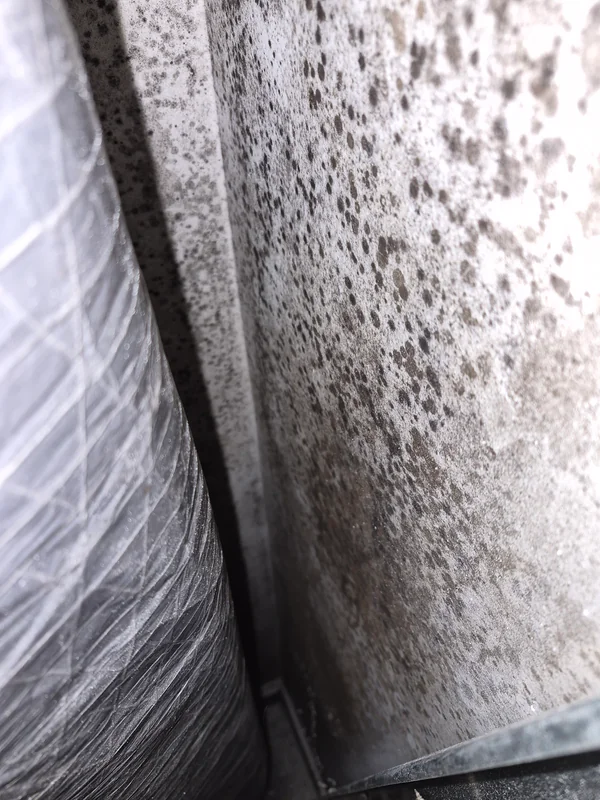
It starts with a free inspection. Before anything else, a certified technician assesses your HVAC system not just the registers you can see, but the interior duct sections where mold actually grows. In Maple Beach and the surrounding Bristol Township area, where homes sit at low elevation and groundwater intrusion is a recurring reality, that inspection often reveals moisture damage in places you had no idea existed.
You’ll get a clear picture of what’s in there and what needs to happen next, with upfront pricing before any work begins.
If cleaning is warranted, we use professional-grade equipment negative air pressure systems and HEPA vacuums that physically removes debris, biological material, and mold from both supply and return ducts. This isn’t a one-vent pass with a shop vac. It’s a full-system cleaning that typically takes several hours for a residential home.
For properties that have experienced flooding or chronic moisture exposure, we follow mechanical cleaning with air duct sanitizing applying antimicrobial treatments to duct surfaces that address what vacuuming alone can’t reach. When the job is complete, we test the affected areas to confirm the mold is gone. That post-remediation verification step is documented and given to you, so you’re not taking anyone’s word for it.
If your situation involves an insurance claim which is common when mold is connected to flood or water damage in this area we work directly with your insurance company to handle the documentation and communication.

Ready to get started?
We handle the full scope of what a home’s air system actually needs not just the ducts, but the components that connect to them and the verification that confirms the work held. For Bristol Township homeowners, that typically means addressing a combination of issues that have built up over decades in homes that were never designed with today’s humidity and flood exposure in mind.
Air duct cleaning covers both supply and return ducts throughout the system the full network, not a partial pass. When mold or biological contamination is present, we apply air duct sanitizing after mechanical cleaning to treat duct surfaces with environmentally friendly antimicrobial products that are safe for households with children and pets.
For homes near Otter Creek or in the lower-elevation sections of the township where moisture infiltration is most persistent, this step is often what makes the difference between a job that holds and one that doesn’t. We also offer dryer vent cleaning the NFPA reports over 15,000 dryer-related house fires per year nationally, with the leading cause being clogged vents.
In homes where the original dryer vent configuration may date back to the 1950s longer runs, more bends, and decades of lint accumulation that’s not a distant statistic. We also offer mold inspection and indoor air quality testing for homeowners who want a complete picture of what their HVAC system is circulating, not just a surface-level cleaning.

Flooding is one of the most direct pathways for mold to enter an HVAC system, and it’s a scenario that Maple Beach and Bristol Township homeowners deal with more than most. When water gets into a basement whether from the Delaware rising, groundwater intrusion, or storm drainage backing up it doesn’t stay contained to the visible surfaces you dry out.
Moisture works its way into crawl spaces, wall cavities, and the lower sections of ductwork, where it sits in a dark, enclosed environment that’s exactly what mold needs to grow. The most common signs are a musty or earthy smell when the HVAC system runs, visible discoloration near registers or on duct surfaces you can access, and worsening allergy or respiratory symptoms that seem to track with when the heat or AC is on.
The problem is that most mold growth in ductwork happens in sections you can’t see from the register. A certified inspection which we offer for free uses proper equipment to assess the interior of the system and take samples for lab testing when needed. That’s the only way to know for certain what you’re dealing with.
This is a fair question, and the honest answer is: it depends on what’s actually in your ducts. The EPA’s position is nuanced they don’t recommend routine cleaning as a universal maintenance task, but they do explicitly recommend it when mold is confirmed in the system, when there’s been pest or rodent activity, or when significant debris is clogging airflow.
Those aren’t rare edge cases in older homes. They’re common findings in the mid-century housing stock throughout Bristol Township. Where air duct cleaning becomes clearly worth it is when there’s a specific problem driving the need a flood event, a mold discovery elsewhere in the home, worsening respiratory symptoms, or a musty smell from the vents.
In those situations, cleaning and sanitizing the duct system isn’t a maintenance preference, it’s addressing an active contamination issue. The risk of not acting is that every time your HVAC runs, it’s distributing whatever is growing in those ducts to every room in the house. A free inspection from us will tell you whether you actually have a problem worth addressing no pressure, no commitment.
They’re related but not the same thing, and in a moisture-prone area like Maple Beach and the surrounding Bristol Township community, understanding the difference matters. Air duct cleaning is the mechanical process using professional equipment to physically remove dust, debris, biological material, and mold from the interior surfaces of your ductwork.
It’s the foundation of the job, and it has to be done correctly with negative air pressure systems and HEPA vacuums to avoid spreading contaminants through the home during the process. Air duct sanitizing is what comes after. Once the physical debris is removed, sanitizing applies an antimicrobial treatment to the duct surfaces to address mold spores, bacteria, and other biological contaminants that mechanical cleaning alone can’t fully eliminate.
Think of it as the difference between sweeping a floor and then disinfecting it. For homes that have experienced flooding, chronic groundwater exposure, or confirmed mold growth which describes a significant portion of the low-elevation properties in this area sanitizing is the step that makes the cleaning durable rather than temporary. We use environmentally friendly products that are safe for households with children and pets.
It can, and it’s worth knowing what you’re working with. The Levittown-era homes that make up the majority of Bristol Township’s housing stock were built primarily in the 1950s, which means the ductwork in many of these homes is approaching or past 70 years old even if the furnace and AC units have been replaced over the decades.
Duct systems from that era were built to different standards, with different materials and configurations than modern installations. Some homes were originally built with radiant floor heating and converted to forced-air systems later, meaning the ductwork itself may be a retrofit from the 1960s or 70s. What that means practically is that decades of accumulated dust, biological material, and moisture infiltration have had a long time to build up in a system that may never have been professionally cleaned.
In a low-elevation, riverfront community like Maple Beach where ambient humidity is persistently higher than inland Bucks County neighborhoods, that accumulation is compounded by moisture exposure. A certified inspection will identify what’s actually present and whether the ductwork is in a condition where cleaning is appropriate or whether there are sections that need more significant attention.
Yes and this is one of the most important reasons to address mold in ductwork quickly rather than waiting to see if it gets worse. Your HVAC system moves air through every room in the house every time it runs. If mold is growing inside the duct system, the air passing through those ducts picks up spores and distributes them throughout the home.
A mold problem that starts in a single section of ductwork say, near the air handler in the basement, where moisture exposure is highest can spread contamination to every room connected to that system. This is especially relevant in Bristol Township homes where mold may have been remediated from a basement, crawl space, or wall cavity, but the HVAC system wasn’t inspected as part of that process.
A remediated space can be recontaminated if the duct system was never addressed. We approach air duct cleaning as a mold specialist, not just a duct cleaner which means we’re looking at the full picture of how mold moves through a home, not just the section in front of us.
It depends on the cause and how the claim is documented, but in many cases where mold is connected to a covered water damage event like flooding, a burst pipe, or storm-related intrusion there is a legitimate basis for an insurance claim. Bristol Township homeowners who have dealt with Delaware River flooding or groundwater intrusion from storms may have had water damage that was documented at the time but didn’t fully account for what happened inside the HVAC system months later.
The key is documentation. Insurance companies need clear evidence connecting the mold or contamination to a covered event, and they need it presented in a way that meets their requirements. We work directly with insurance companies on claims handling the documentation, the communication, and the process of getting the work covered where coverage applies.
For homeowners in a flood-prone area who are already navigating the complexity of flood insurance and property damage claims, having someone who knows how to work within that system is a meaningful part of what we bring to the job.
Other Services we provide in Maple Beach