
Hear from Our Customers

Most Frankford homeowners who call about air duct cleaning aren’t thinking about dust. They’re thinking about that smell the one that shows up when the heat kicks on in October, or when the AC runs through a humid July afternoon. They’re thinking about kids who’ve been congested for months. They’re thinking about a house that’s been in the family for decades and wondering what’s been quietly building up inside the walls and ductwork the whole time.
The reality in Frankford is specific. Most homes here were built before 1939, before modern ventilation codes existed, before anyone thought about sealing ductwork or putting vapor barriers in basements. Those basements damp by design, built on ground that sits close to Frankford Creek have been feeding moisture into HVAC systems for generations. When a forced-air system runs through that environment long enough, mold doesn’t stay in the basement. It gets distributed to every room, every time the system cycles.
Once the ducts are properly cleaned and the mold source is addressed, the difference is real and immediate. The smell goes away. Allergy symptoms that seemed random start to ease. You stop wondering what your family is breathing. For households with young kids or anyone with asthma, that’s not a small thing it’s the whole point.
We’ve been doing this for over 15 years, and the work speaks for itself not because of what’s on a website, but because customers name our owner personally in their reviews, describe him showing up when he said he would, and come back when they buy another property.
We’re based in Bensalem, PA about 15 minutes north of Frankford via I-95. That’s not a coincidence. We’ve spent years working in the older housing stock along this corridor: the attached rowhouses, the damp basements, the HVAC systems retrofitted into homes that were never designed for them. We know what those systems look like inside. We know what Frankford Creek’s moisture legacy does to a foundation over decades.
Every job starts with a free inspection and ends with testing to confirm the mold is actually gone not just cleaned around. Upfront pricing means no surprises, and financing is available for families who need flexibility on the cost. We handle insurance claims directly, so you’re not left navigating that alone.

It starts with the free inspection. One of our certified technicians comes to your home, looks at the HVAC system, checks the ductwork, and tells you honestly what we find. In Frankford’s older rowhouses, that inspection often includes the basement because that’s where most of the moisture originates, and that’s where HVAC equipment tends to sit in these homes. If mold is present in the ducts, you’ll know exactly where, how extensive it is, and what it will take to address it before anyone starts work.
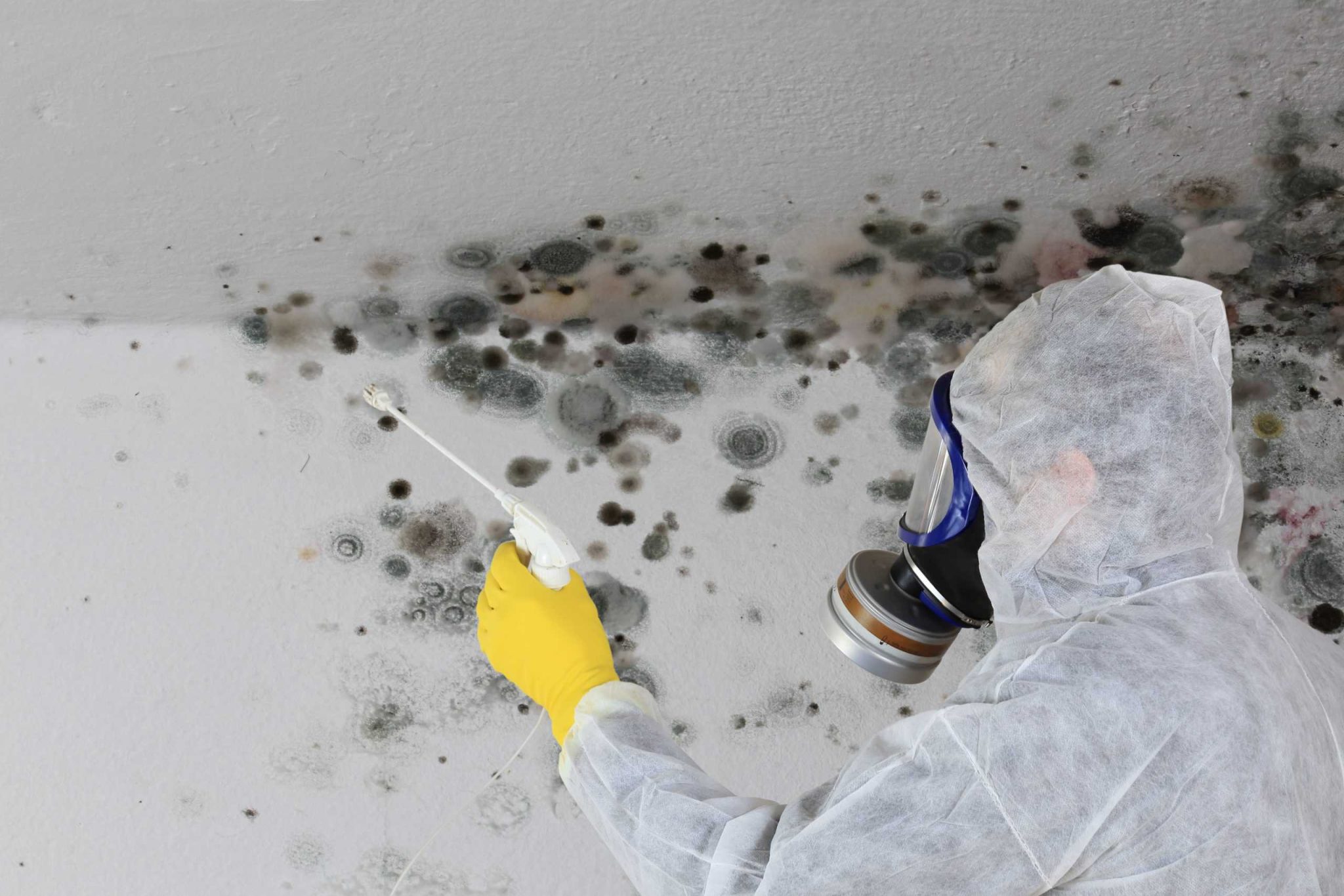
If the job moves forward, containment comes first. This is the step that separates a mold specialist from a general duct cleaner. Disturbing mold without containment protocols spreads spores through the ductwork, into the living space, into adjacent units through shared walls. In a Frankford rowhouse where your wall is your neighbor’s wall, that matters. We use proper containment before any mechanical cleaning begins, then clear the ductwork using professional-grade equipment designed for this specific type of contamination.
After the cleaning, the work gets verified. We test the affected areas to confirm mold has been eliminated not assumed eliminated. You get documentation. That’s useful for insurance claims, for landlord-tenant situations, and for your own peace of mind. The whole process typically runs four to six hours for a standard home, and you’ll know what was found and what was done before the crew leaves.
Ready to get started?
Air duct cleaning at Mack’s Mold Removal isn’t a standalone maintenance item it’s part of a complete approach to mold in the HVAC system. That means the inspection covers the full system: supply ducts, return ducts, the equipment in the basement, and the connections between them. In Philadelphia County homes, particularly the attached rowhouses that make up most of Frankford’s housing stock, the return air intake is often located in or near a damp basement space. That’s the entry point for moisture, and it’s the first place mold takes hold.
Beyond the ducts themselves, we also handle dryer vent cleaning a service that carries real fire safety implications in a dense neighborhood like Frankford. The NFPA reports nearly 16,000 dryer-related house fires per year nationally, with clogged vents as the leading cause. In a row of attached homes where fire spreads laterally, a blocked dryer vent isn’t just a hazard for one unit. It’s a hazard for the whole row.
Air duct sanitizing is available as a follow-up step after mechanical cleaning an antimicrobial treatment applied to the interior duct surfaces to address any remaining biological contamination. This is particularly relevant in homes with confirmed mold history, or in properties that have been vacant for a period and had dormant HVAC systems reactivated. Frankford’s 11.8% vacancy rate means a meaningful number of homes cycle through exactly that scenario. If you’ve recently moved into a property on Frankford Avenue or anywhere in the 19124 zip code and the HVAC hasn’t been touched in years, this step is worth discussing.
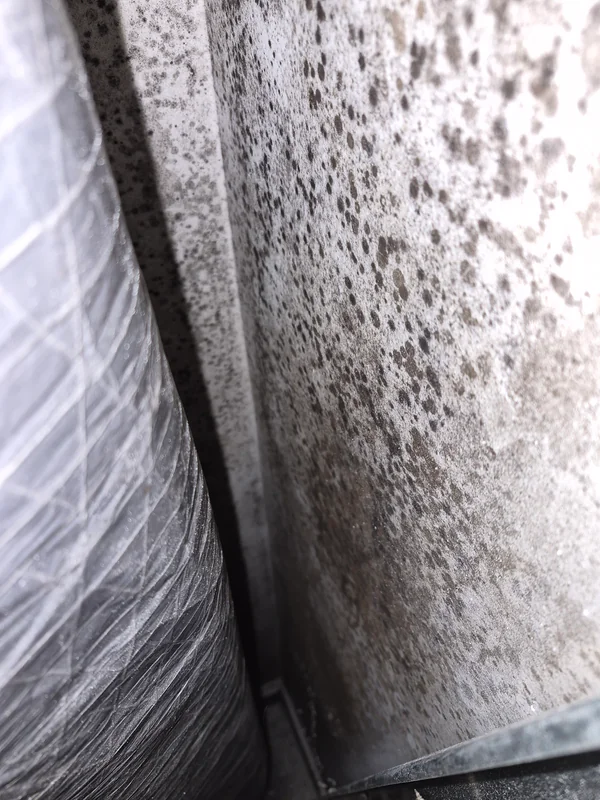
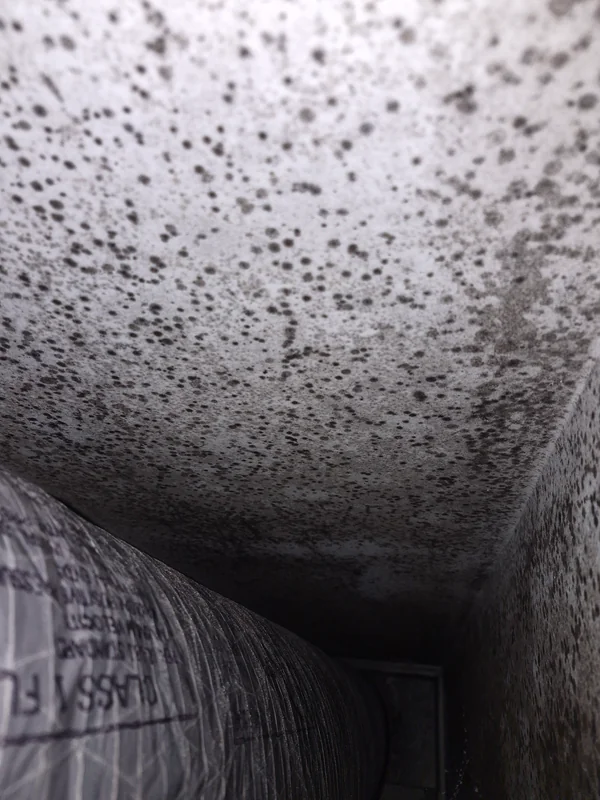
The most common sign is a musty smell that appears specifically when the HVAC system runs not all the time, but when the heat or AC kicks on. That smell often gets dismissed as the system “warming up,” especially in the fall when heating season starts. In Frankford’s older rowhouses, where HVAC equipment frequently sits in damp basements and ductwork runs through uninsulated wall cavities, that smell is a legitimate warning sign worth taking seriously.
Other indicators include worsening allergy or asthma symptoms that don’t have an obvious cause, visible discoloration around vent registers, or a history of water intrusion in the basement. Because most of Frankford’s housing stock was built before modern vapor barriers and ventilation standards existed, chronic basement moisture is common and the HVAC system is often the pathway that carries that moisture problem into the rest of the house. A free inspection from a certified mold specialist will tell you definitively what’s there and where it is, without any cost or commitment upfront.
The honest answer is: it depends on why you’re doing it. The EPA takes a nuanced position routine air duct cleaning in the absence of a specific problem has unclear benefits. But when mold is confirmed in the ductwork, when there’s been pest activity, or when significant debris is clogging the system, the EPA explicitly recommends cleaning. That’s a different conversation than a generic “improve your air quality” pitch.
The scam concern is real, and it’s worth knowing about. The documented “$99 air duct cleaning” offer is a well-known bait-and-switch: a low-ball price gets someone in the door, and then the upsells start. We operate differently free inspection, written upfront pricing, and the number you’re quoted is the number you pay. If the inspection doesn’t find a problem worth addressing, you’ll be told that. The goal is to give you accurate information, not to manufacture a job that doesn’t need doing.
Yes, and this is one of the most important things to understand about mold in a forced-air HVAC system. Every time the system runs, air moves through the entire duct network. If mold is growing in one section of the ductwork typically near the equipment in a damp basement, or in a poorly insulated duct run the system distributes spores to every room connected to it simultaneously. One contaminated section becomes a whole-house problem over time.
In Frankford specifically, the attached rowhouse construction adds another layer. Shared party walls mean moisture can migrate laterally between units, and HVAC intakes near shared wall cavities can pull in air that’s been affected by a neighboring unit’s moisture problem. This doesn’t mean you’re automatically responsible for your neighbor’s situation, but it does mean that a mold issue in your ducts may have a source that extends beyond your own property line. A thorough inspection that looks at the full moisture pathway basement, walls, and duct system gives you the clearest picture of what you’re actually dealing with.
They’re two separate steps, and both matter when mold is involved. Cleaning is the mechanical process using professional equipment to physically remove debris, dust, mold colonies, and biological buildup from the interior surfaces of the ductwork. This requires negative air pressure systems and HEPA-rated vacuums, not the kind of equipment a general handyman or a $99 service brings to the job.
Sanitizing is what happens after the mechanical cleaning. An antimicrobial treatment is applied to the interior duct surfaces to address any remaining biological contamination at the microscopic level. Think of it as the difference between removing visible mold and treating the surface so it’s harder for mold to reestablish itself. For homes with a confirmed mold history which describes a significant portion of Frankford’s pre-war rowhouse stock sanitizing after cleaning is the step that makes the results last. If you skip it, you’ve addressed the symptom but not fully treated the environment that allowed the mold to grow in the first place.
The general industry recommendation is every three to five years for a typical home, but that baseline assumes a relatively modern, well-sealed HVAC system in a dry environment. Frankford’s housing stock doesn’t fit that description. Homes built before 1939 with HVAC systems retrofitted into damp basements, running through unsealed duct connections and uninsulated wall cavities, are operating in conditions that accelerate contamination buildup significantly.
For these homes, a more practical approach is to treat the first cleaning as a baseline inspection find out what’s actually in the system before setting a maintenance schedule. If the inspection reveals significant mold growth or years of accumulated debris, that tells you the system needs attention now and probably needs to be monitored more closely going forward. After that initial cleaning and verification, a three-year interval is reasonable for most Frankford homes, with earlier attention warranted after any basement flooding, water intrusion event, or period of vacancy when the HVAC system sat dormant.
Yes, and the geography makes it straightforward. We’re based in Bensalem, PA, which sits directly north of Frankford along the I-95 corridor. The same interstate that runs along Frankford’s eastern edge connects the two areas in about 15 minutes under normal conditions. We already serve Philadelphia County as part of our regular service area, and technicians traveling to Frankford aren’t making a cross-region trip it’s a short, familiar route.
That proximity matters practically, not just on paper. The same-day and next-day response that shows up repeatedly in our customer reviews is genuinely achievable for Frankford residents because the distance is real, not a marketing approximation. If you call on a Friday with a concern about mold in your ducts, the response time reflects an actual 15-minute drive not a dispatcher trying to figure out if your zip code falls within a service radius. For a neighborhood where many residents commute out via the Market-Frankford Line and don’t have flexibility in their schedules, that kind of responsiveness is worth knowing about before you call.
Other Services we provide in Frankford