
Hear from Our Customers
Most Center City residents notice the smell first. That musty hit when the system kicks on, the allergy flare-up that doesn’t make sense in a freshly renovated apartment, the feeling that something’s off but you can’t point to it. It’s rarely coming from the vent you can see. It’s coming from a duct section buried inside a wall that was built in the 1880s and retrofitted with modern HVAC decades later.
Center City’s building stock creates HVAC conditions that are fundamentally different from a suburban split-system home. Narrow rowhouses in Fitler Square and Washington Square West weren’t designed with ductwork in mind contractors routed it wherever it would fit, through dead spaces and interior partitions that trap moisture and are nearly impossible to inspect without the right equipment. When we clear those systems, residents describe a noticeable difference in how the air feels, not just how it smells.
The urban heat island effect compounds the problem here in a way it doesn’t in surrounding neighborhoods. Center City sits between the Schuylkill River and the Delaware River, with concrete and brick in every direction and minimal tree cover. Your HVAC runs harder and longer than any system in the suburbs, which means more condensation builds up inside the ductwork. More moisture means a more hospitable environment for mold and that cycle doesn’t stop on its own.
We’ve been doing this work for over 15 years, and Center City has been part of our territory the whole time. We’re based out of Bensalem in Bucks County, with direct access to Center City via I-95 and we’ve been working in Philadelphia’s rowhouses, converted lofts, and condo buildings long enough to know that this city’s buildings don’t behave like anything else in the region.
What separates us from a general duct cleaning company is our mold remediation background. Certified inspectors, lab testing of samples, and post-cleaning verification that the job actually worked not just a technician with a vacuum and a verbal assurance. Multiple customers have specifically called out the post-remediation testing as the reason they felt confident the problem was resolved, not just managed.
The owner is personally involved in the work. That shows up in the reviews, where customers name him by name and describe him arriving on time, honoring the quoted price, and explaining what he found. In a market full of franchise operations and aggregator listings, that kind of accountability is genuinely rare.

It starts with a free inspection. Before anything is quoted or scheduled, we assess the actual condition of your duct system what’s there, what’s not, and where the problem is coming from. In Center City specifically, that inspection often involves navigating non-standard duct configurations in older buildings: runs through interior partitions, dead spaces in historic rowhouse walls, or shared ventilation infrastructure in high-rise condos. The inspection is how you get an accurate picture instead of a guess.
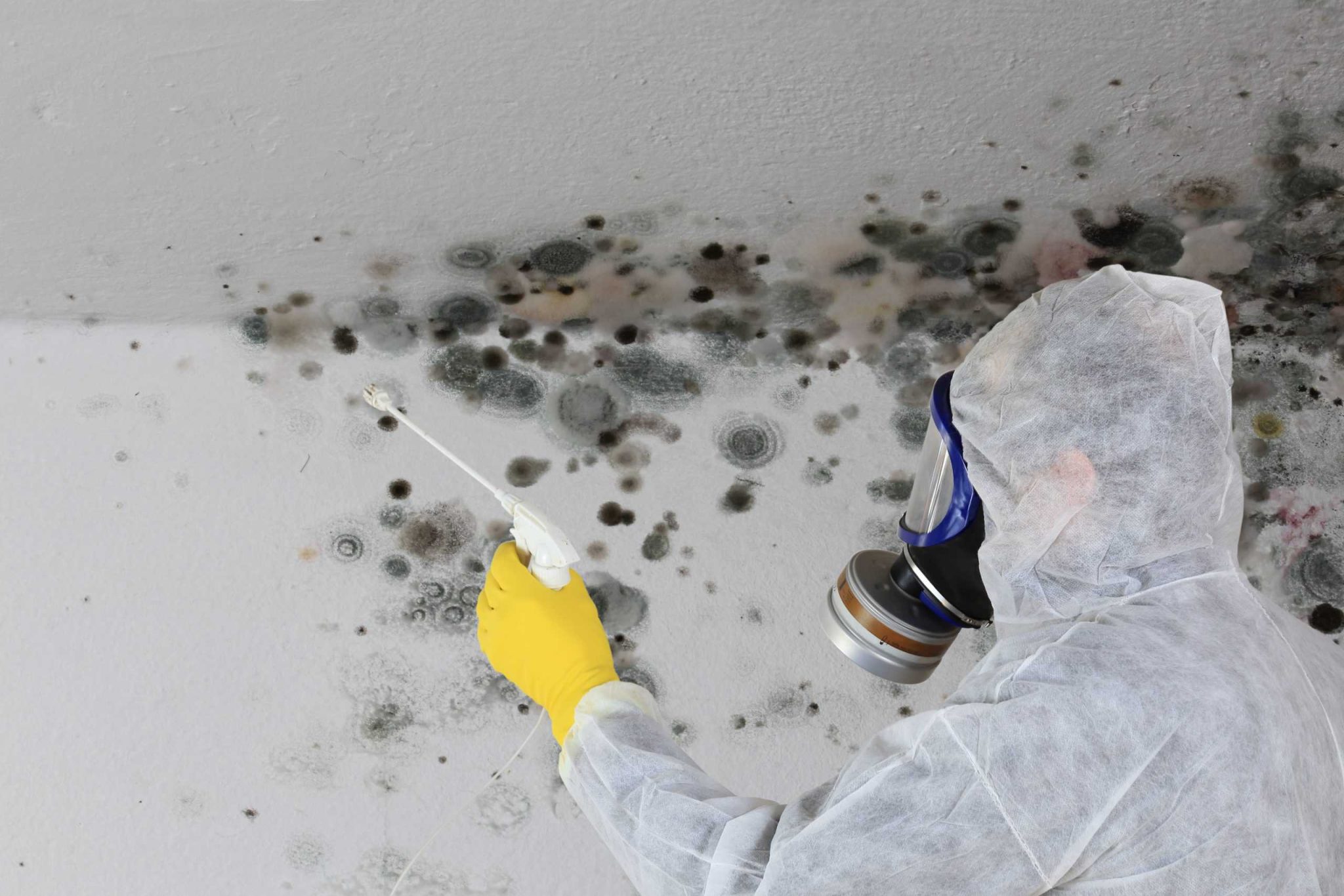
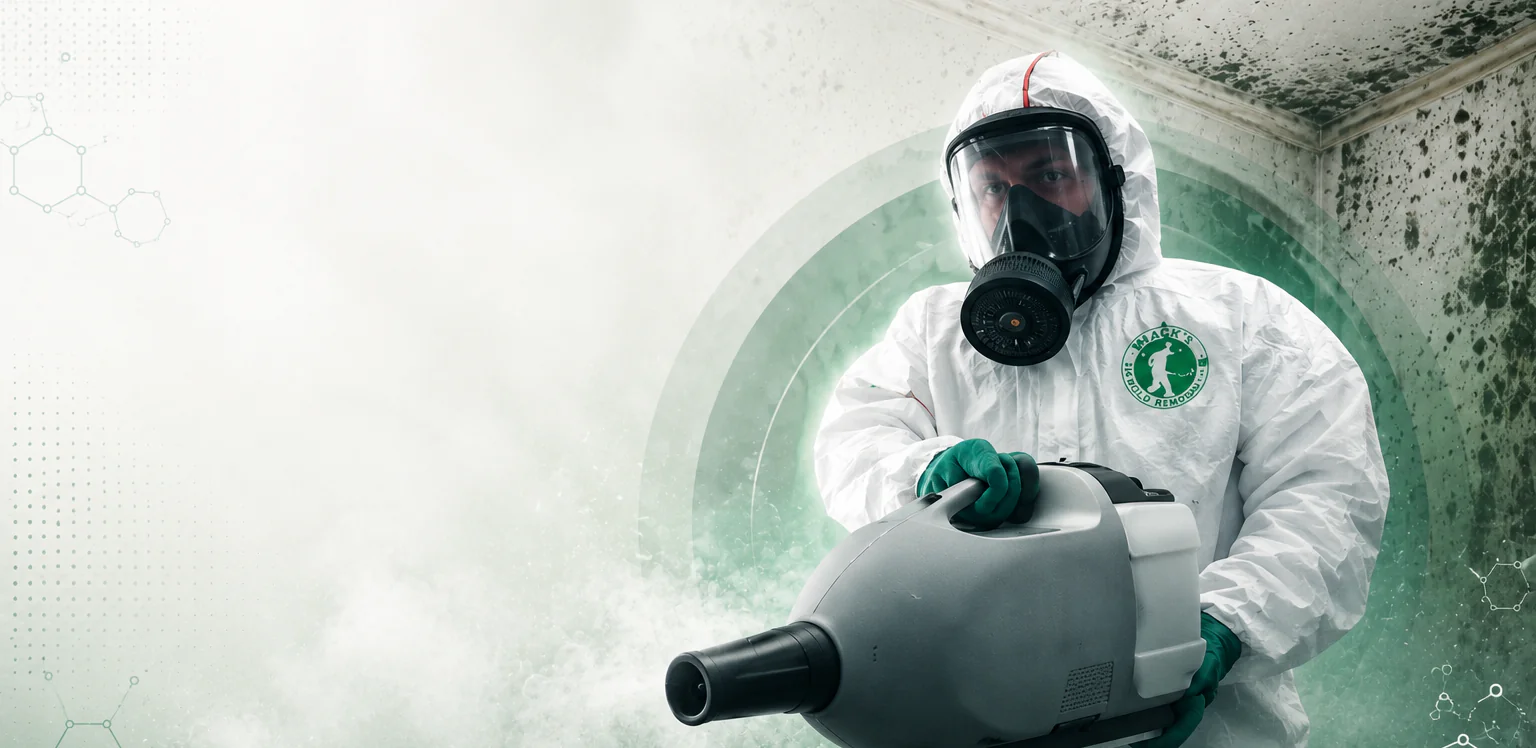
From there, the work involves mechanical cleaning of both supply and return ducts using professional-grade equipment not the kind of setup a $99 bait-and-switch operation brings. When mold is present or suspected, we use containment protocols to prevent spores from spreading to other areas of the home during the cleaning process. This is the step that matters most and the step that general duct cleaners without mold training skip entirely.
After the cleaning, we test affected areas to confirm the mold is gone. You get documentation, not a handshake. For Center City condo owners dealing with shared dryer vent systems or building management coordination, we can work directly with your HOA or property manager to handle the logistics. The whole job typically takes four to six hours for a standard residential system, and upfront pricing means the number you’re given before the job starts is the number you pay.
Ready to get started?
Our air duct cleaning covers the full system supply ducts, return ducts, and the components in between. When mold is identified, the process includes containment, removal, and post-cleaning lab verification that the contamination has been resolved. Air duct sanitizing is available as an additional step, applying antimicrobial treatment to duct surfaces after the mechanical cleaning is complete. These are two different things, and both matter when biological growth is involved.
Dryer vent cleaning is also part of what we handle, and in Center City it’s not just a maintenance item. Many of the high-rise condominiums along the Avenue of the Arts corridor and the converted loft buildings in Callowhill route dryer vents through shared duct systems that serve multiple units before terminating at a rooftop exhaust. Lint accumulates faster in those shared systems, maintenance responsibility is often unclear between unit owners and building management, and blockages in rooftop terminations from birds or debris can back heat and moisture into multiple units at once. The NFPA reports over 15,000 dryer-related house fires per year, with failure to clean vents as the leading cause. In a shared system, that risk doesn’t belong to just one unit.
We also work directly with insurance companies for mold-related claims a real advantage in Center City’s older building stock, where water intrusion events from aging masonry, failing window seals, and increasingly intense Philadelphia rainstorms generate insurance claims with enough frequency that knowing how to navigate the process makes a meaningful difference.
If your rowhouse was built before 1950 and a large percentage of the residential stock in Rittenhouse, Society Hill, Fitler Square, and Washington Square West was the ductwork was retrofitted into a building that was never designed to have it. That means duct runs through interior wall cavities, closets, and dead spaces that don’t get inspected, don’t get cleaned, and accumulate moisture from the surrounding masonry over time. Center City averages 49 inches of rain per year, and older rowhouse walls absorb and release that moisture in ways that modern insulated construction doesn’t.
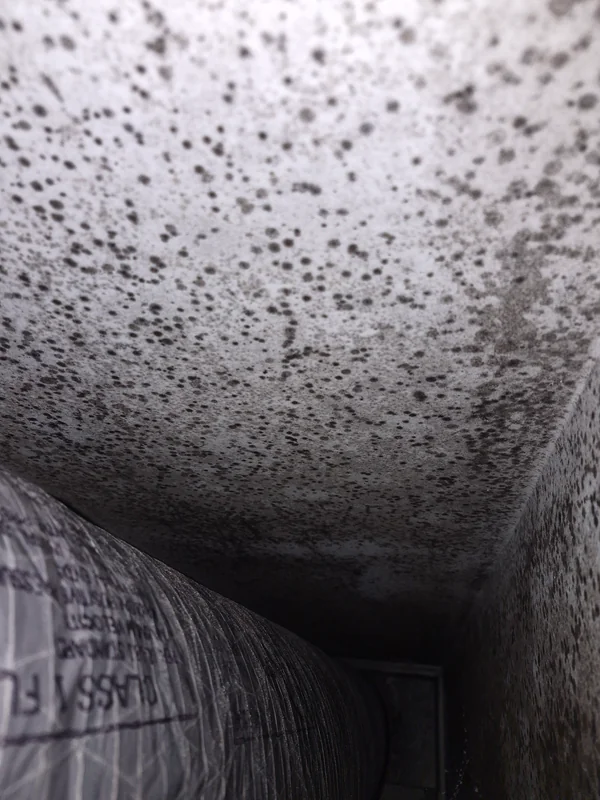
The result is that mold can establish itself in sections of your duct system that you’ll never see from a register. A professional inspection tells you what’s actually there. If the system is clean, you’ll know. If it’s not, you’ll have documentation of the problem and a clear plan to address it not a guess based on whether the air smells off on a given day.
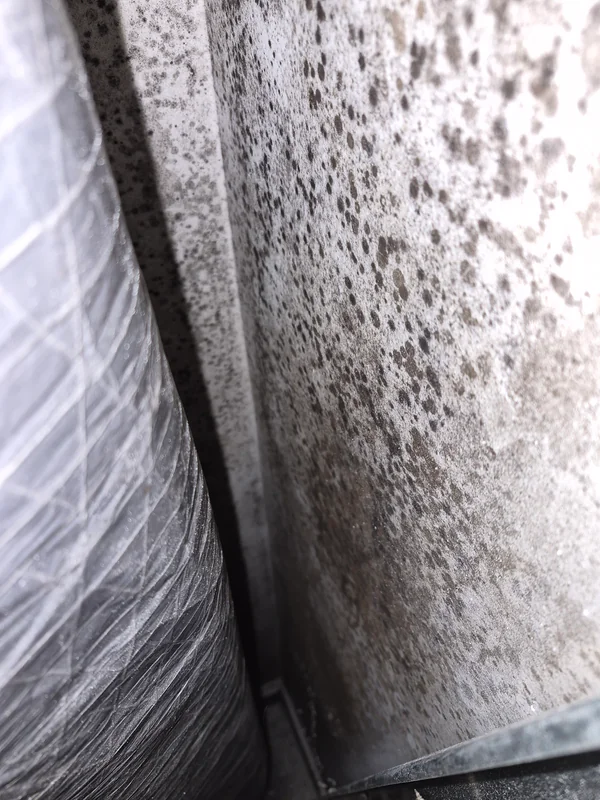
The most common sign is a musty smell that appears specifically when your HVAC system is running and disappears when it’s off. If the smell is coming from the air coming out of your vents rather than a specific room or surface, the source is almost certainly inside the duct system itself. Other indicators include worsening allergy or respiratory symptoms that don’t have a clear explanation, visible discoloration or dark residue around vent registers, or a history of water intrusion in the building.
In Center City’s older building stock, mold in ductwork is frequently a secondary consequence of moisture that entered through aging masonry, a failed roof detail, or a slow leak around a window or pipe. The mold in the duct didn’t start in the duct it started somewhere else and spread. A proper inspection looks at both the duct system and the likely moisture source, because cleaning the ducts without addressing where the moisture is coming from means the problem comes back. That’s the difference between a mold remediation specialist and a standard duct cleaning service.
The industry standard recommendation is every three to five years for a typical residential system under normal conditions. But “normal conditions” doesn’t describe most of Center City’s building stock. High-rise condos with shared ventilation infrastructure, older fan coil systems, and dryer vents that route through multiple units before reaching a rooftop termination accumulate contamination faster than a standard suburban split-system home. If your building has had any water intrusion events, recent renovation work in your unit or adjacent units, or a history of pest activity in the building, more frequent inspection is warranted.
Post-renovation cleaning is particularly relevant in Center City’s active remodel market. Gut renovations of historic rowhouses and loft conversions generate sawdust, drywall dust, and silica particles that get drawn into the HVAC system during construction. Those particles settle in ductwork and create the organic substrate that mold needs to grow. If your unit or building recently went through significant renovation work and the ducts haven’t been cleaned since, that’s a reasonable trigger for an inspection regardless of when the last cleaning occurred.
Yes and this is one of the reasons mold in ductwork is treated differently from mold on a wall or in a basement. Every time your HVAC system runs, air moves through the entire duct network and out through every register in the home. If mold is present in one section of the duct system, the airflow distributes spores to every room the system serves. A localized mold problem in a basement or bathroom stays localized until it’s addressed. A mold problem inside your ductwork is already whole-house by the time you notice it.
This is also why the cleaning process matters as much as the cleaning itself. Disturbing mold inside a duct system without proper containment can release a concentrated volume of spores into the living space during the cleaning which is worse than leaving it alone. A mold remediation specialist uses containment protocols during duct cleaning to prevent that from happening. A general HVAC cleaning service typically does not, because they’re not trained in mold remediation. In a densely occupied Center City building where your air supply shares infrastructure with adjacent units, the stakes are higher than in a detached single-family home.
No, and this is one of the most well-documented scams in the home services industry. The $99 offer is a foot-in-the-door tactic a price designed to get a technician into your home, at which point the upsell begins. You’ll be told your system is far more contaminated than expected, that additional treatments are required, that the quoted price only covered a portion of the work, or that declining the upsells will void any warranty. By the time the job is done, the bill looks nothing like the original quote.
NADCA’s benchmark for a legitimate professional air duct cleaning is between $450 and $1,000 for a typical home. A real cleaning of both supply and return ducts with professional equipment takes four to six hours. A $99 job cannot cover that scope of work at any margin that makes business sense which means either the work isn’t being done properly, or the final invoice won’t be $99. We provide a free inspection and an upfront written quote before any work begins. The price you’re given is the price you pay.
Yes. Condo buildings throughout Center City from the high-rises near Logan Square to the converted loft buildings in the Callowhill district often have HOA bylaws or building management policies that govern how and when maintenance work can be performed in individual units. Some buildings specify who is responsible for duct cleaning (unit owner versus building management), what access is required to shared mechanical spaces, and what materials are permitted in dryer vent systems.
We’re familiar with the coordination that multi-unit buildings require and can work directly with your building manager or HOA board when the job involves shared infrastructure particularly for dryer vent systems that route through common duct chases before reaching a rooftop termination. If you’re a unit owner who needs to confirm scope of responsibility before scheduling, the free inspection is a good starting point. It gives you a clear picture of what’s inside your unit’s system specifically, which is often the information you need before any HOA conversation.
Other Services we provide in Center City